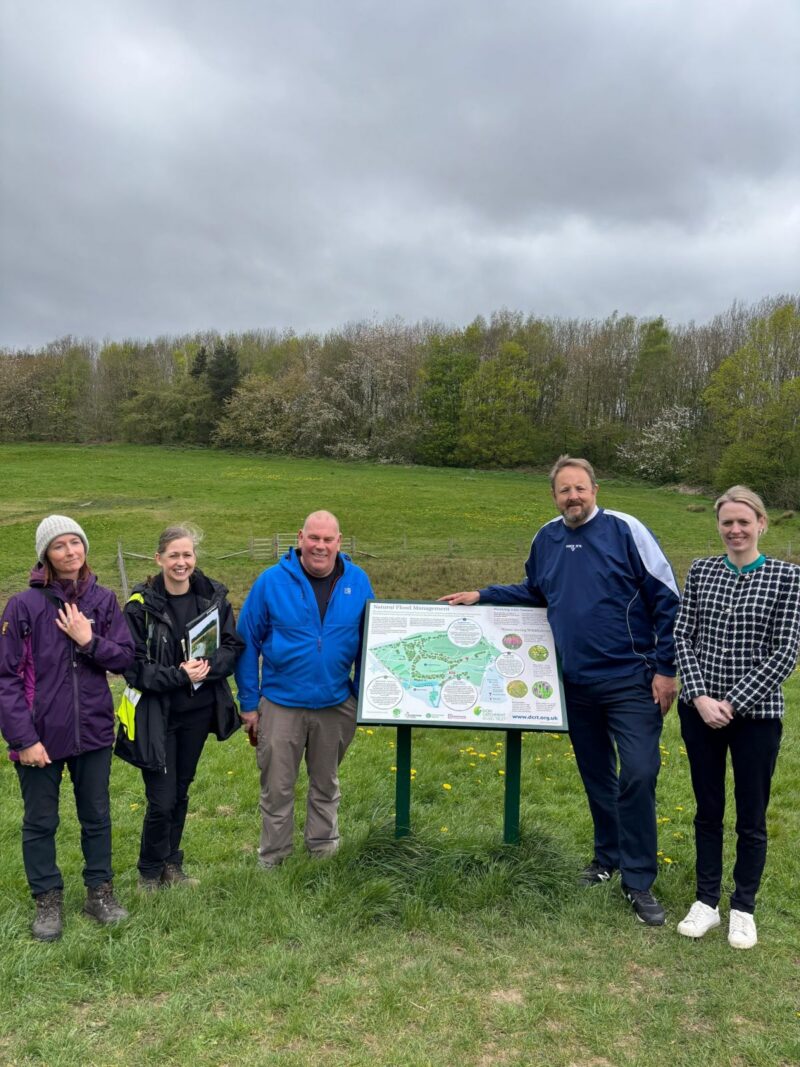
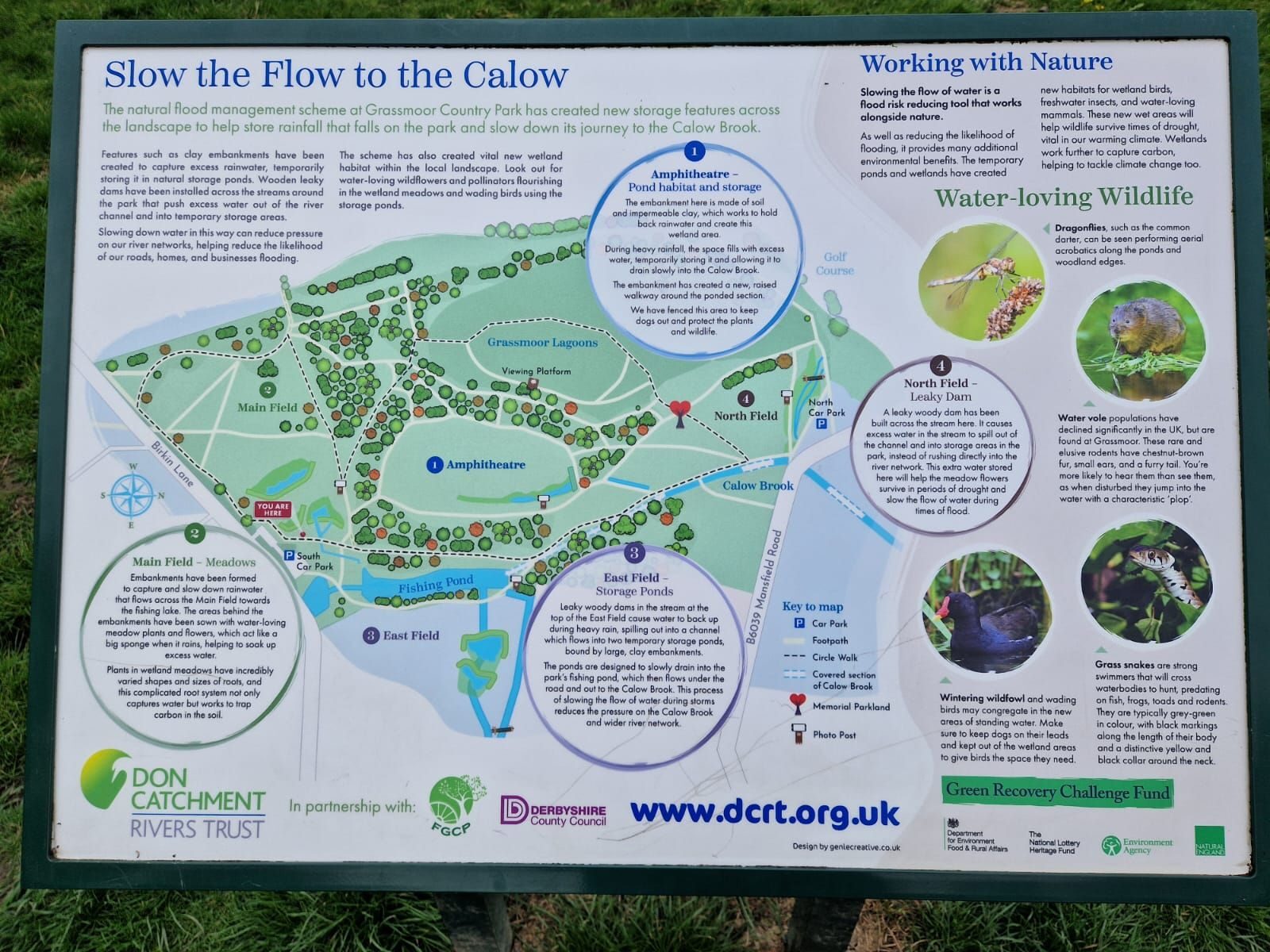
I was recently invited to visit Grassmoor Country Park alongside colleagues, including Louise Sandher-Jones MP, and local partners such as Derbyshire County Council, the Friends of Grassmoor Country Park and the Environment Agency, to see first-hand the “Slow the Flow to the Calow” scheme in action. I have also visited a number of other Slow the Flow schemes, including Hardcastle Crags, a National Trust site in West Yorkshire, and the SuDS (Sustainable Drainage Systems) that have been installed across Mansfield.
We all know the impact that flooding has had on Chesterfield in recent years and seen the devastating effect that heavy rainfall and overwhelmed drainage systems can have on homes, businesses and infrastructure. Whilst it is tempting to think we can just protect ourselves by building ever bigger walls at flood-risk areas, the truth is that as climate change increases the intensity and frequency of these events, we need to rethink how we manage water across our landscapes.
Whilst there are significant interventions and infrastructure changes needed to protect Chesterfield and other flood-risk areas, Natural Flood Management and ‘Slow the Flow’ schemes will also be vital in providing additional practical and effective methods to manage excess water and reduce flooding, at the same time as protecting natural habitats and boosting biodiversity.
Rather than relying solely on traditional hard defences, natural flood management works with the landscape to reduce risk. Measures such as planting trees, restoring wetlands and installing leaky dams help to slow the movement of water upstream. This reduces the volume and speed of water reaching vulnerable areas like Chesterfield, lowering the likelihood of flooding at critical moments.
The ‘Slow the Flow to the Calow’ is a relatively low-cost intervention that could be highly impactful in reducing flooding in surrounding areas. The Don Catchment Rivers Trust, working together with other agencies, has brought the strength of the community behind the project by ensuring local people and park users understand how the scheme works and benefits the park, and can be a positive for wildlife, whilst it does the job of holding back water and reducing flooding.
These are not theoretical solutions and are already providing clear results. However, while the benefits are clear, so too are the barriers. Scaling up natural flood management requires sustained funding, supportive policy frameworks and closer collaboration between landowners, local authorities and national agencies. Too often, these projects rely on short-term grants or the goodwill of volunteers. Dr Debbie Coldwell, Natural Flood Management Officer at the Don Catchment Rivers Trust, who has helped deliver the ‘Slow the Flow to the Calow’ scheme, explained that they are keen to create a similar scheme within the Chesterfield Borough at Somersall Park or Holmebrook Valley Country Park, but they need the funds, political will and long-term focus from agencies.
Flood resilience cannot be achieved through a single approach. Engineered defences will always have a role to play, particularly in urban areas. But they must be complemented by upstream interventions that reduce pressure on those systems in the first place. Natural flood management offers a way to do exactly that, while also delivering wider environmental benefits such as improved biodiversity and water quality.
The lesson from Grassmoor Country Park, Hardcastle Crags and other schemes, shows that by working with nature, we can build stronger, more resilient communities. For Chesterfield, that means investing in solutions that address the root causes of flooding, not just the symptoms. It also means recognising the value of local knowledge and community leadership in shaping those solutions.
The task now is to match the ambition of agencies like The Don Catchment Rivers Trust with funding and legislation, it is hugely welcome that the government’s new flooding funding formula gives greater weight to nature based solutions, so we should be better able to win support for this kind of approach. Recognising that traditional flood defences are insufficient against increasing extreme weather, to unlock more natural flood management and help protect our homes and towns.